The 10-second version · 4 min
How to read a score
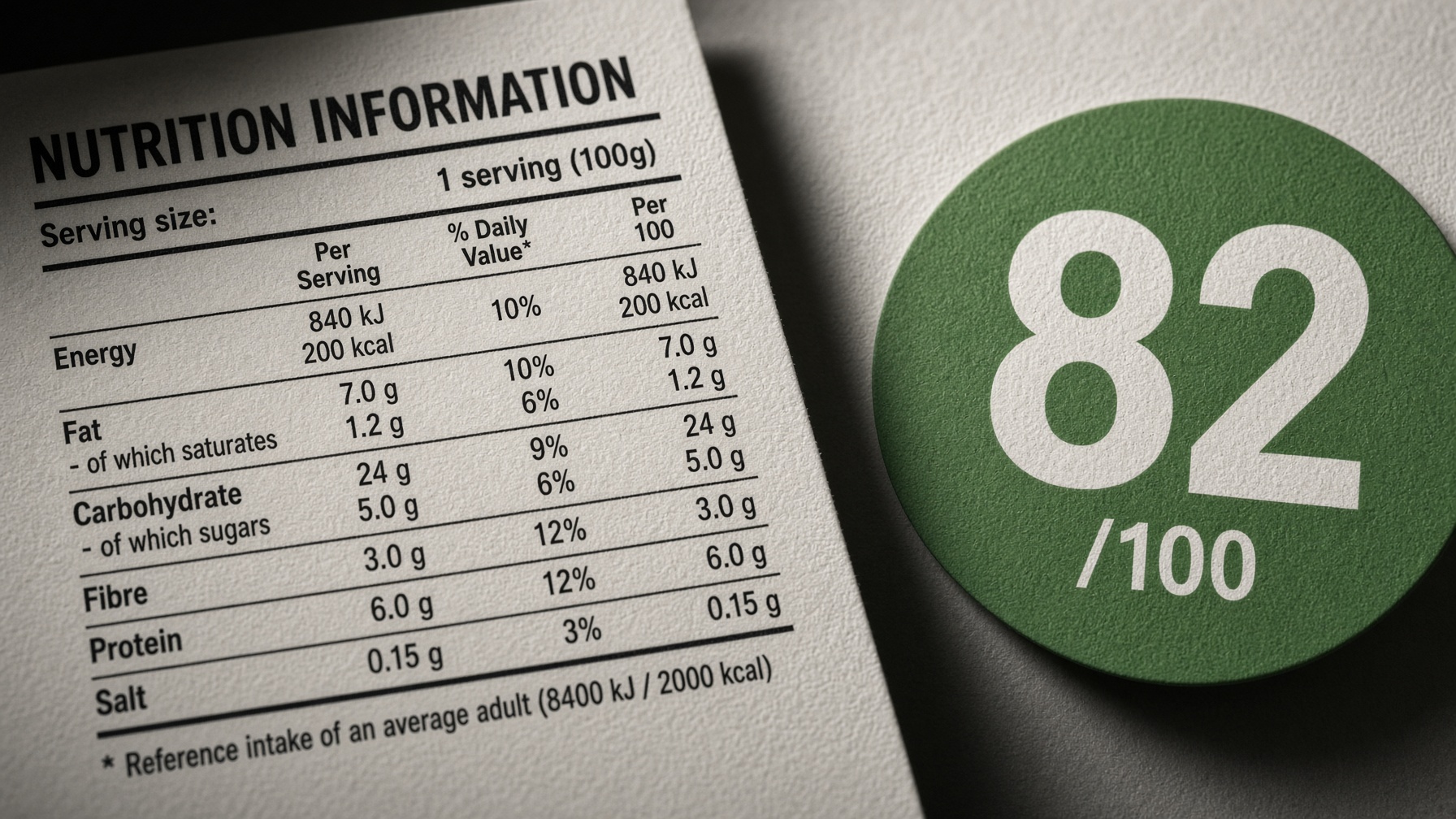
0 to 100. Green is a keep. Red is a walk-away. The number is a recipe, not a vibe — and ceilings stop a pretty organic stamp from hiding a bad box.
Four colours, one decision
75–100 excellent: everyday food, a calm cream, an honest bag of kibble. 50–74 good: fine sometimes. 25–49 poor: a treat, not a habit. Below 25, we leave it on the shelf and take the neighbour. The disc is filled on purpose — Yuka taught people to read a number in a blink. We kept that.
What the number is made of
Food: 50% nutrition (sugar, salt, saturated fat, fibre, protein, fruit), 25% extras, 20% processing, 5% organic. Then ceilings. A weak nutrition box cannot be rated Good. One high-concern extra cannot hide in a long list. Two of them, and the pack is Avoid. Creams and washes use a different recipe: the worst actor sets the ceiling. One rough preservative keeps a pretty bottle out of the green.
Ceilings, in plain English
A cola cannot be ‘Good’ because the nutrition box is weak and the recipe is a factory drink. A ham with nitrite cannot be ‘Good’ because a high-concern extra sets a ceiling. Organic sugar is still sugar. Open any product and read ‘Why this number’ — it names what pulled the score down and what held it up. If that sentence and the disc disagree, believe the sentence.
What the number is not
Not a medical opinion, a calorie counter, or a moral grade. Olive oil and yogurt can both belong in the house with different numbers. Use it to compare two similar things, not a steak to a shampoo.
The extras we mean
On our shelves
Real packs. Tap one — the score is the same as the rest of the shop.